July 31, 2026 · 6-min read
How to Do a Bible Object Lesson With Things From Your Kitchen
The best teaching tool you own might already be sitting in your pantry.
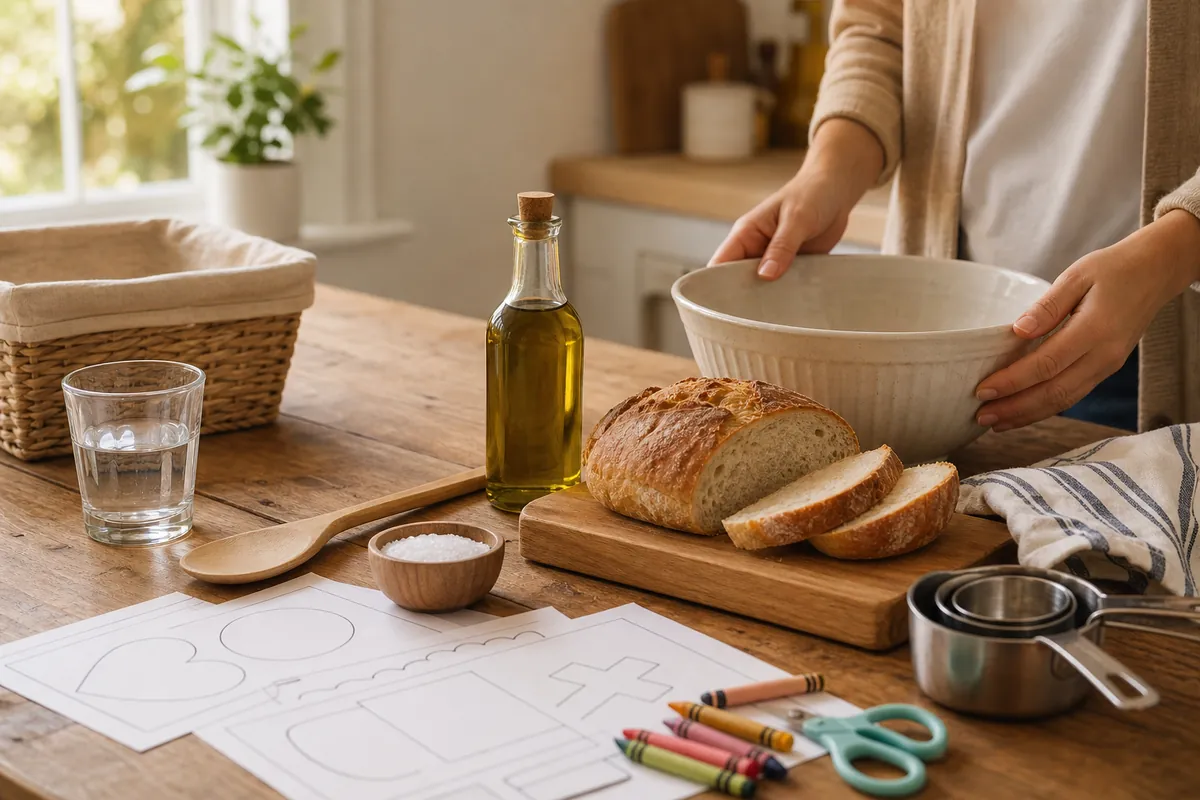
Bible object lessons for kids using household items work because nearly any kitchen staple can carry a spiritual truth — salt, yeast, a sponge, an egg, a loaf of bread. You do not need a craft store run or a lesson budget. You need five minutes, one object, and a Bible verse it naturally connects to.
That is genuinely good news on a week when you had zero time to plan. Open a cupboard, grab something, and you likely already have a lesson.
What makes a good kitchen object lesson?
The best object lessons have one thing in common: the object does something. Kids remember action, not just show-and-tell.
Look for items that can:
- Change shape or state (ice melting, yeast rising, an egg cracking)
- Absorb or release something (a sponge, a tea bag, salt in water)
- Compare visibly to something else (a full cup versus an empty one)
If the object just sits there while you talk, it is a prop, not an object lesson. Give the kids something to watch happen.
How do I structure a Bible object lesson in 5 minutes?
Keep the shape simple and repeatable so you can build a whole toolkit of these over time.
- Show the object and ask what they notice about it.
- Do the action — pour it, crack it, dissolve it, squeeze it.
- Connect it to a verse, said plainly, not preached.
- Ask one or two questions that bring it back to their own life.
- Let it end there. Resist the urge to over-explain.
That last step matters more than it sounds. A good object lesson trusts the object and the verse to do the work.
What are some easy kitchen object lesson ideas?
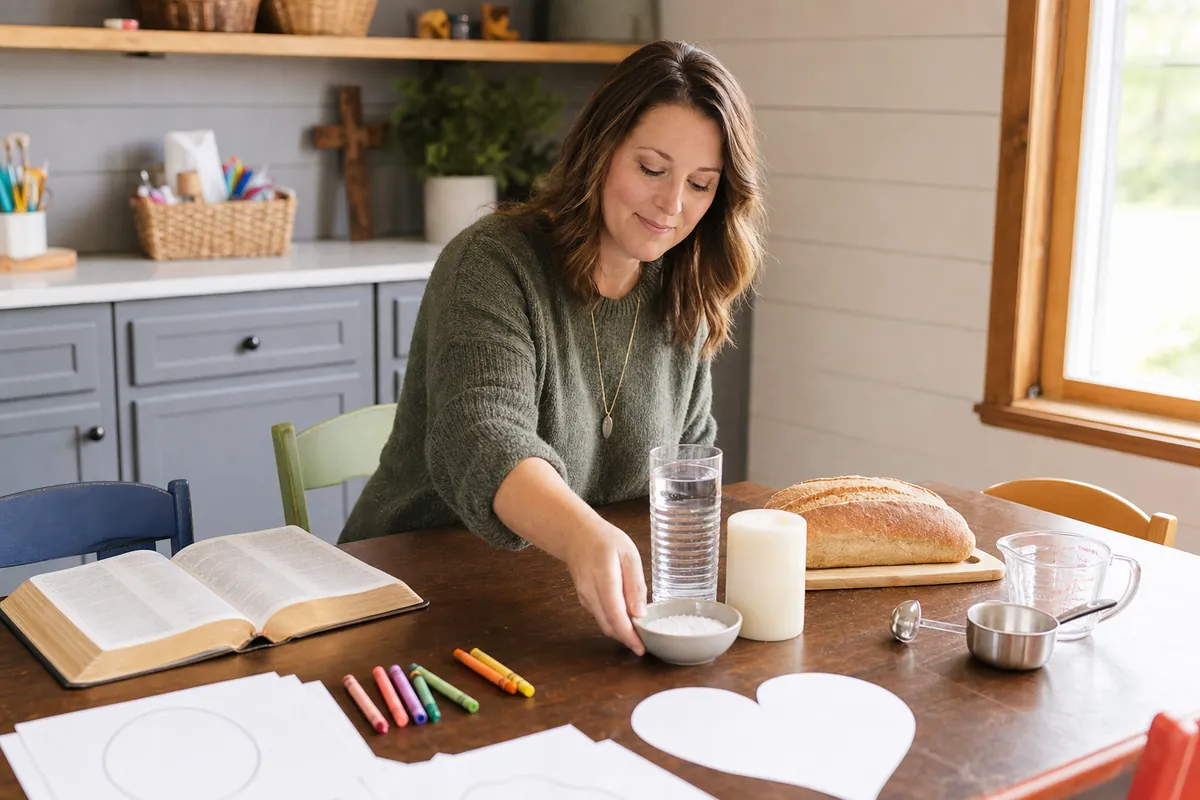
Here are six that need almost nothing but what is already in your kitchen.
Salt — Pour a little into your palm and let kids taste or smell it. Read Matthew 5:13, where Jesus says His followers are "the salt of the earth." Ask: what does salt do to food that seems small but makes a big difference? That is what one kind word or honest choice can do in a room.
Yeast (or a rising dough ball) — Show a small packet of yeast, then a photo or a bowl of dough that has already risen. Read Matthew 13:33, where Jesus compares the kingdom of heaven to yeast worked into dough. Ask: how does something so small end up changing the whole loaf?
A sponge and a cup of water — Let the sponge soak up water, then squeeze it out. Read Psalm 119:11, "I have hidden your word in my heart, that I might not sin against you." Ask: what fills you up during the week, and what comes out when life squeezes you?
A loaf of bread — Hold it up and read John 6:35, where Jesus says, "I am the bread of life." Ask: why do we get hungry again after eating regular food, but Jesus says He satisfies differently?
A raw egg — Crack it into a bowl, then try to put it back together. Read Ephesians 4:29 about building others up with our words. Ask: what does this show us about words we cannot take back once we say them?
A measuring cup filled past the line — Pour water until it overflows the rim. Read Psalm 23:5, "my cup overflows." Ask: what does it look like when God gives us more than we asked for?
You do not need all six in one sitting. Pick one, and you have a full lesson.
How do I ask questions that actually land?
The object gets attention. The questions are what make it stick.
Try to move through three simple layers:
- Observation: "What happened when I did that?"
- Understanding: "What does that remind you of in the verse?"
- Application: "Where might that show up in your week?"
You do not need clever questions. You need honest ones, asked slowly enough for kids to actually think before answering.
How do I avoid the lesson falling flat?
A few small things trip up most object lessons, and all of them are avoidable.
- Don't explain before you demonstrate. Let them watch the action first, then talk.
- Don't rescue every silence. A pause after a question usually means a kid is thinking, not stuck.
- Don't stack two objects in one lesson. One clear picture beats two competing ones.
- Don't skip the verse. The object illustrates; the Bible teaches. Keep both.
If a lesson falls flat one week, that is fine. Kitchen items are cheap to try again next week with a different object.
Where do I go from here?
If your kids (or your class) respond well to hands-on lessons like these, they will likely respond well to a hands-on way of reading Scripture themselves. The S.O.A.P. Bible study method works on the same principle — give kids something concrete to do with a verse instead of just listening to it.
For kids ready to try that on their own, the Kids Bible Study Worksheet using the SOAP method is a simple printable that walks them through it step by step, no extra explanation needed from you. You can browse more printable resources in the shop if you are looking for something to pair with a lesson like this.
Next time you are short on prep time, open the pantry before you open a lesson book. The truth you need to teach is probably already sitting on a shelf.
Frequently asked questions
- What is a Bible object lesson?
- It is a short, hands-on teaching moment where a familiar object helps kids understand a spiritual truth. Seeing and touching something makes the lesson stick better than words alone.
- How long should an object lesson be for kids church?
- Most work well in three to seven minutes. The object grabs attention fast, so you do not need a long setup, just a clear point and a few good questions.
- Do object lessons work for all ages?
- Yes, though the questions you ask should shift. Younger kids respond to simple 'what did you see' questions, while older kids can handle 'what does this mean for how I live' questions.
- What household items work best for Bible object lessons?
- Things with an obvious action work best, like salt that dissolves, a sponge that soaks up water, or an egg that cannot be uncracked. The object should do something in front of the kids, not just sit there.
- Can I do a Bible object lesson without any prep?
- Often, yes. Many kitchen staples like salt, bread, or a cup of water are ready to use as-is, so you can teach a solid object lesson with almost no lead time.
- object lessons
- kids church
- sunday school
- bible activities for kids
- teaching ideas
- household items
Related reading
- How to Teach Kids to Read the Bible for ThemselvesLearn how to teach kids to read the Bible with simple, Scripture-first steps that build confidence and understanding.
- How to Teach Kids to Confess Sin Without Shaming ThemLearn how to teach kids about confession without shame using simple words, calm tone, and Scripture that points straight to forgiveness, not fear.
- How to Teach Kids the Ten Commandments (Without a Boring List)A simple, Scripture-first way to teach kids the Ten Commandments through stories, actions, and everyday choices instead of memorization.