For Kids Church & Families · 5-min read
Kids Sermon Notes: How to Keep Children Engaged Through the Whole Sermon
The reason kids squirm through church usually isn't boredom — it's that no-one gave them a job. One printable page changes that.

Every parent knows the twenty-minute mark. The hymn book slides off the seat. The whisper of “is it nearly finished?”The third trip to the bathroom that isn't really about the bathroom. You spend the back half of the service refereeing instead of worshipping, and you go home feeling like church was something you survived rather than shared.
Here's the thing though — it's not a discipline problem. It's an attention problem. Adults take notes to stay with a talk. We underline, we jot the verse, we write the one line that landed. Kids are handed forty minutes of grown-up words and given nothing to do with their hands or their eyes. Of course they drift.
A sermon-notes page gives a child the same thing the adults have: a job. Something to listen for, somewhere to put what they hear, a little picture to colour while the preacher talks. It turns a passive forty minutes into an active one — and the verse that sits under the whole idea is Romans 10:17 — “So faith comes from hearing, and hearing through the word of Christ.” Hearing is the work. We're just giving them a way to actually do it.

Scout's tip
Don't peek over their shoulder mid-sermon. Let them fill it their way — the wobbly spelling and the lion coloured purple are exactly the bits you'll want to keep.
Why a colouring task makes them listen harder
It feels backwards — surely colouring is a distraction? But the activity on these sheets isn't free-for-all doodling. The “Listen + Color” section asks the child to colour a picture only when they hear a certain word— God, Jesus, faith, trust, obey, Amen. Suddenly they're leaning in, waiting for the preacher to say it, pencil ready.
That's not distraction. That's a child tracking a sermon word by word — which is more than most adults manage by minute thirty.
What's on the page
Every sermon-notes sheet is one page, designed so a child can fill it in without help once they get the hang of it:
- Sermon title & Scripture passage— two lines up the top to catch the day's big idea.
- What I learned about God — the heart of the page, in their own words.
- My favourite song today — a gentle warm-up that gets them writing.
- One way I can live God's way this week— turning the sermon into something they'll actually do.
- Listen + Color — the attention anchor: colour the picture when you hear the word.
- Questions I have — a little cloud for the things they're wondering (the car-ride-home conversation starts itself).
- A prayer box— ending in “Amen,” so the page closes the way the service does.
Pick the theme that gets your kid to the page
Same gentle structure underneath — but the theme is the hook. The soccer-mad eight-year-old and the dreamy little one who'd live under the sea if she could need different doors into the same quiet habit. The collection comes in five editions so you can match the page to the child:
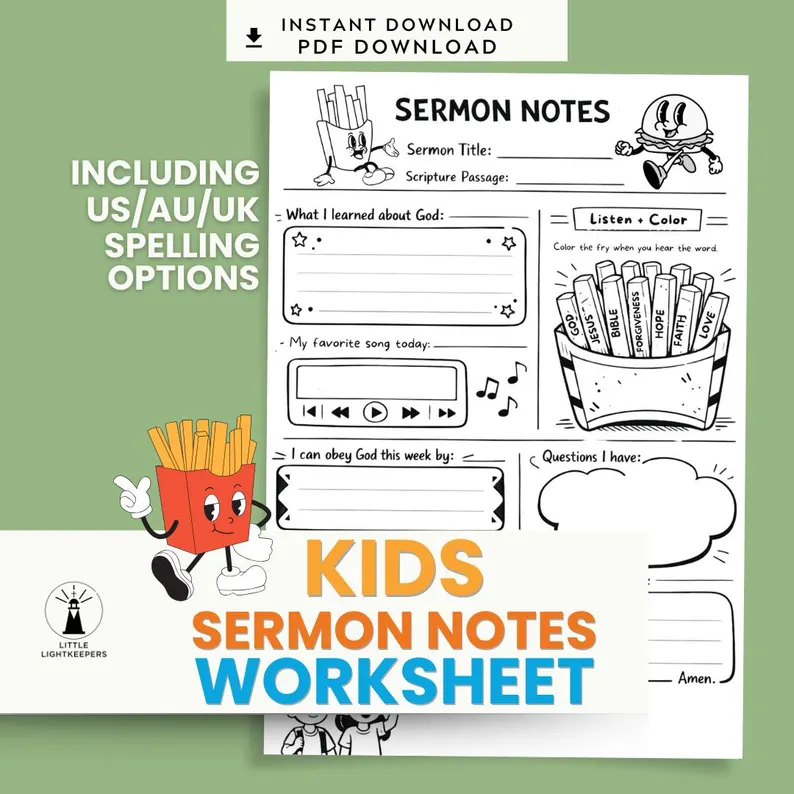
Fast Food Edition
Colour the fries as they hear each word — a favourite for the kid who lives for a Sunday treat.
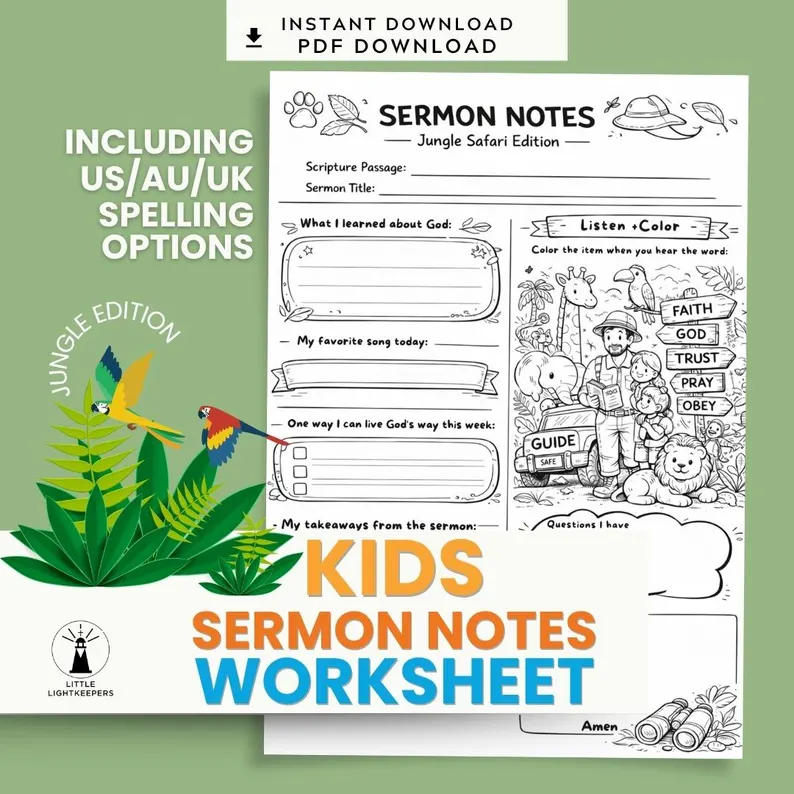
Jungle Safari Edition
Lions, giraffes and a safari guide. Perfect for the little explorer who can't sit still.
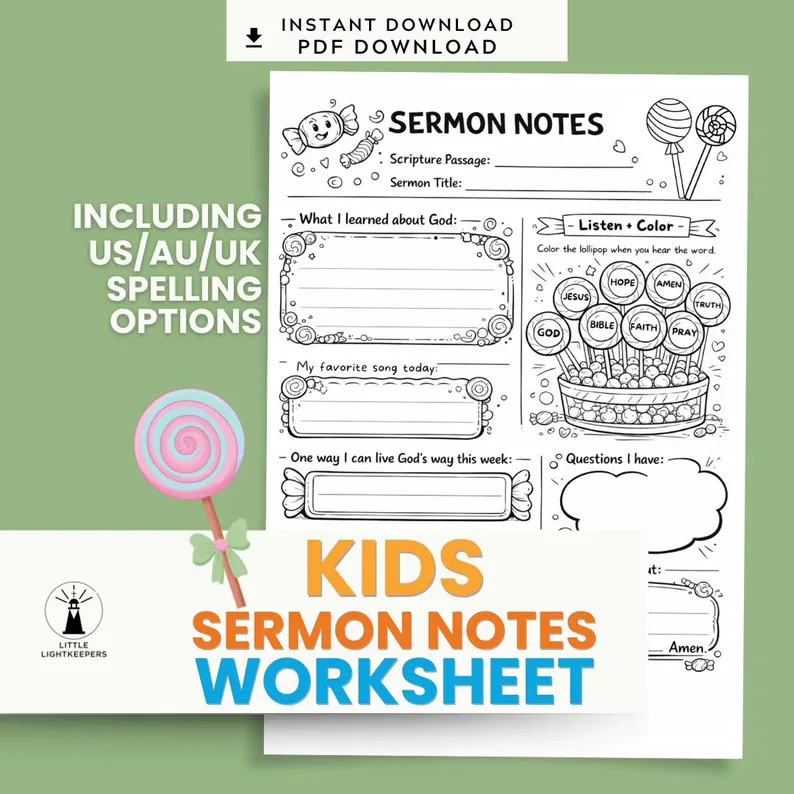
Candy Shop Edition
Lollipops and sweets to colour. The gentlest bribe there is for a wriggly five-year-old.
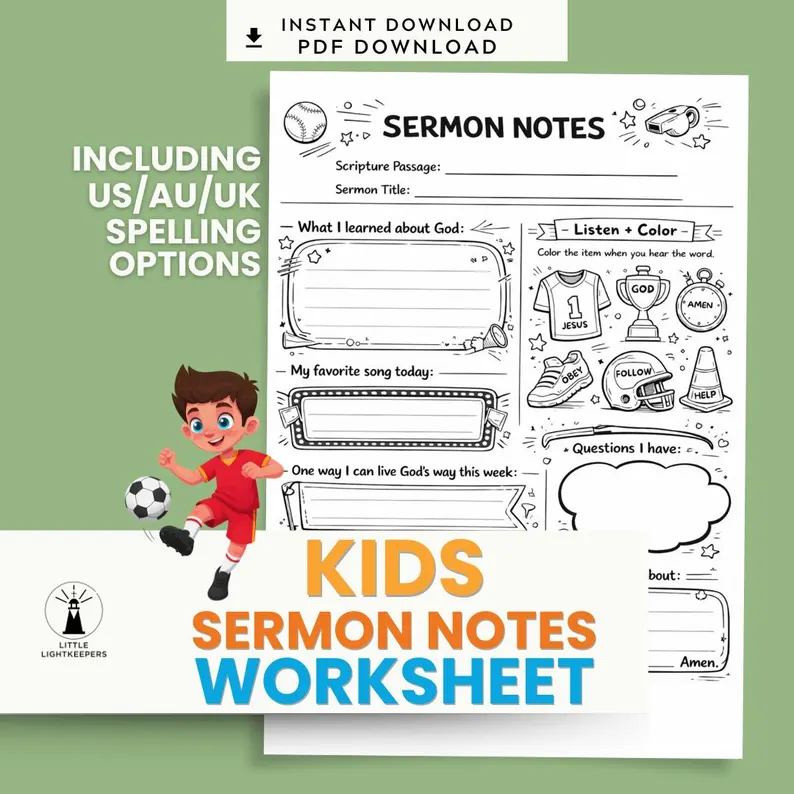
Sports Edition
Soccer, trophies and whistles. The one that finally gets your sporty kid to the page.
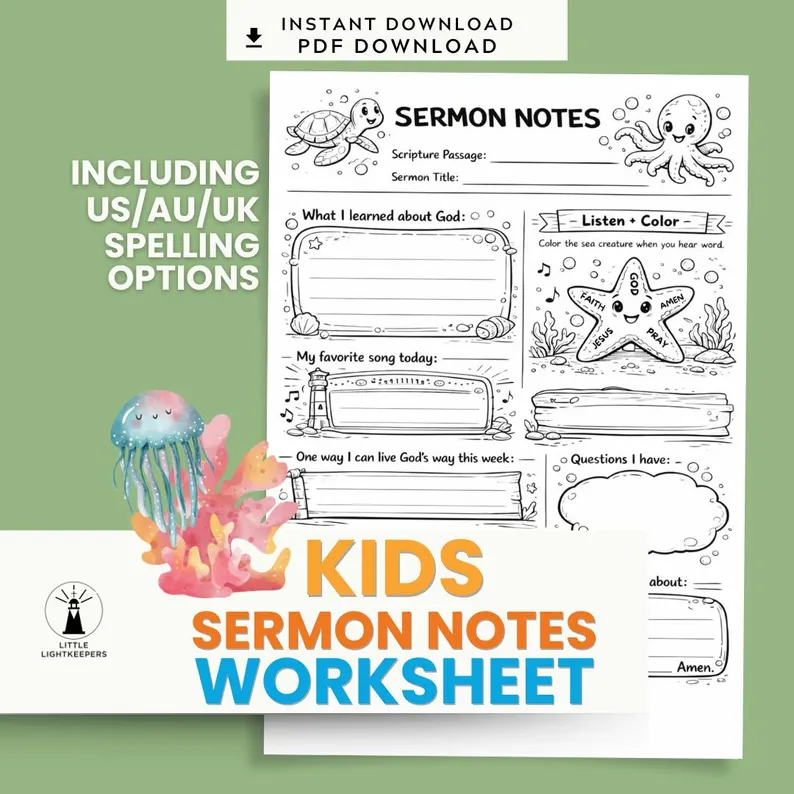
Under the Sea Edition
Turtles, starfish and an octopus. Calm, dreamy, and quietly captivating.
How to use it on Sunday morning
Print it the night before and tuck it in the church bag with a handful of coloured pencils — no sharpener required, nothing to lose under the pew. Hand it over as the sermon starts, not before, so the colouring lines up with the talk instead of being finished during worship.
Then leave it be. Don't correct the spelling, don't fix the picture. On the drive home, ask one question: “What did you write you learned about God?” That single question, week after week, does more than any lecture ever will.


Frequently asked
What age are kids sermon notes worksheets for?+
They work best for ages 6 to 12. Younger children (5–7) will lean on the colour-the-word activity and the drawing space, while older kids (8–12) start writing real answers in the 'What I learned about God' and 'One way I can live God's way this week' boxes. Younger ones may need a hand reading the prompts the first few weeks.
Do I need to print them in colour?+
No — that's the point. Every sheet is black-and-white line art designed for kids to colour in as they listen. A few coloured pencils in the bag is all you need, and the colouring is half of what keeps them at the page through the whole sermon.
Will a worksheet distract my child from the message?+
It does the opposite. An idle child fidgets, whispers, and asks to leave. The 'Listen + Color' task asks them to listen for specific words — God, Jesus, faith, trust — so they're actually tracking the sermon to know when to colour. It anchors their attention instead of scattering it.
Is the spelling American, British or Australian?+
All three are included. Every edition comes with US, UK and AU/NZ spelling options (favorite / favourite, color / colour), so the sheet reads naturally wherever your family worships.
Can I use these in Sunday school or kids church?+
Yes — they're built for it. Print a class set, hand one to each child, and you've got a calm, Scripture-focused activity that doubles as something to talk about afterwards. Personal and classroom printing are both included.
Give them something to do on Sunday
Kids Sermon Notes Worksheets — five themes, print at home in minutes.
Fast Food, Jungle Safari, Candy Shop, Sports, and Under the Sea. US, UK & AU spelling included. For ages 6–12, at home or in kids church.
Shop the Sermon Notes Collection →About God's Little Lightkeepers
Faith-filled printables and character-led resources to help little hearts grow at home, at kids church, and in the classroom. Designed by a mum, for mums.