July 14, 2026 · 7-min read
S.O.A.P. Bible Study Method for Kids: A Simple How-To
Four simple steps turn a Bible verse into a habit your child actually looks forward to.
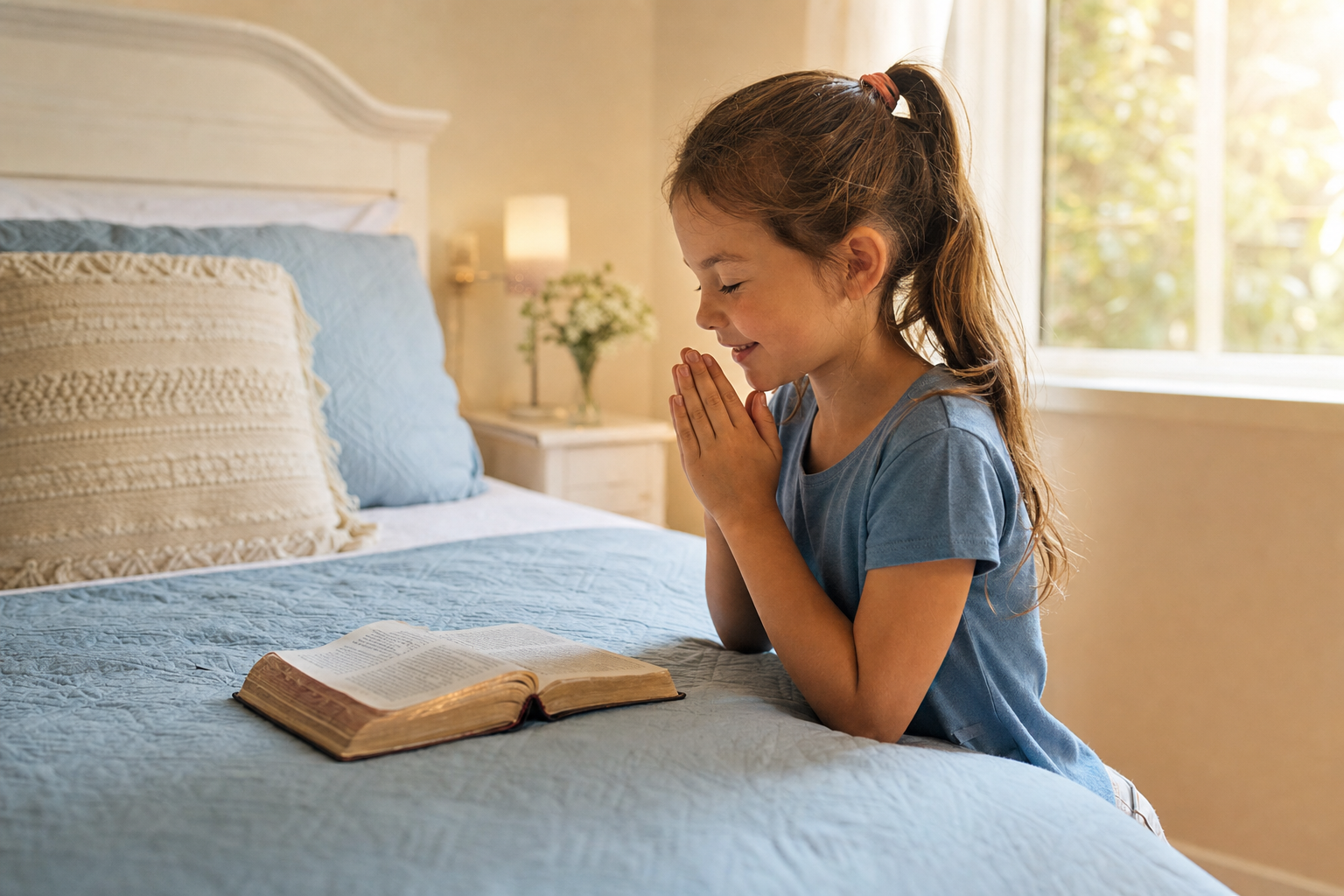
The S.O.A.P. Bible study method for kids is a simple four-step way to read a short passage, notice what it says, apply it to everyday life, and pray about it. S.O.A.P. stands for Scripture, Observation, Application, and Prayer, and it works for most children from about age seven up, once they can write a sentence or two on their own.
It's not a curriculum or a big commitment. It's a page, a pencil, and a few honest questions — the kind of tool that turns "read your Bible" from a vague instruction into something a child can actually do.
What Does S.O.A.P. Stand For?
Each letter is one small step, done in order:
- S — Scripture. Read (or copy out) a short passage.
- O — Observation. Notice something specific about it.
- A — Application. Decide how it connects to their own life this week.
- P — Prayer. Talk to God about what they just read.
That's the whole method. It's borrowed from a study habit adults have used for years, simplified enough that a kid can finish it before breakfast is cold.
Why Does This Method Work So Well for Kids?
Kids don't need more Bible information — most Sunday school kids can already tell you the story of Noah or David and Goliath. What they need is practice noticing and applying, and S.O.A.P. builds exactly that muscle.
It also gives structure without pressure. There's no wrong answer in the Observation step, and no "correct" prayer in the Prayer step. A child who feels intimidated by open-ended devotion time often does better with four clear boxes to fill in.
Reasons it holds up over time:
- It's short — most kids finish in five to ten minutes.
- It's repeatable, so it becomes a habit rather than a one-off activity.
- It teaches kids to read Scripture for themselves, not just listen to someone else explain it.
- It works solo, at a kitchen table, or in a small group at church.
How Do I Walk a Child Through Each Step?
Pick one short passage — a psalm, a few verses from a Gospel story, or a proverb — and work through the letters in order.
S — Scripture
Have your child read the passage, or read it aloud together if they're younger. Some kids like copying the verse out by hand; it slows them down and helps the words stick. A single verse or a short paragraph is enough. You don't need a whole chapter.
O — Observation
Ask what stood out. This is the step kids often find hardest at first, so give them a nudge with a question rather than a blank page:
- Who is in this verse, and what are they doing?
- Is there a word here you don't fully understand?
- What does this tell you about God, or about people?
- Is anything surprising, comforting, or a little confusing?
One or two sentences is a complete answer. Resist the urge to correct or expand on what they notice — the point is that they noticed something themselves.
A — Application
This is where the verse leaves the page. Ask something like:
- Is there something you could try today because of this verse?
- Does this remind you of something happening at school, at home, or with a friend?
- Is there a way you could be kinder, braver, or more honest based on what you just read?
Kids can be very concrete here, and that's good. "I could stop interrupting my sister" is a better answer than a vague "be more loving."
P — Prayer
Close with a short prayer that responds directly to what they wrote. It can be one sentence. If your child struggles with open prayer, offer a starter: "Thank you, God, for..." or "Help me to...". The prayer doesn't need to be polished — it needs to be honest and connected to the verse.
What Age Is Right for S.O.A.P. Journaling?
Most children can start writing their own S.O.A.P. entries around age seven or eight, once they're comfortable putting a sentence on paper. Younger kids, five and six, can still do the method out loud, with a parent or teacher writing down their answers for them.
By nine or ten, many kids can do the whole thing independently in under ten minutes, which is often when it starts to feel like their habit rather than an assignment. If your family is just beginning any kind of regular Bible time together, How to Start Family Devotions (When You Don't Know Where to Begin) is a good place to start before adding a structured method like this one.
What Do I Need to Get Started?
Not much. A Bible, something to write with, and a page to write on.
- A children's Bible or regular Bible, whichever your child reads most comfortably.
- A notebook, or a printed page with the four steps already labeled.
- A pencil — this is meant to feel low-pressure, not permanent.
Some families keep it as simple as a spiral notebook with S.O.A.P. written at the top of each page. Others prefer a page already laid out with space for each step and a suggested verse, so there's one less decision to make on a busy morning. If a ready-made page would help your family or classroom get going faster, our Kids Bible Study Worksheet using the SOAP Method is built exactly for this — Scripture, Observation, Application, and Prayer, laid out for kids to fill in on their own. You can also browse more printable Bible study tools in the shop if you're looking for something to fit a different age or setting.
How Do I Keep Kids Motivated to Stick With It?
Consistency matters more than length. A five-minute S.O.A.P. entry done four days a week will do more for a child's Bible habit than one long session that happens once and then gets abandoned.
A few things that help it stick:
- Keep the same time each day — after breakfast, before bed, or right after school.
- Let them choose the verse sometimes, not just you.
- Read a few entries back together after a month. Kids are often surprised by what they wrote.
- Don't grade or correct their observations. This is their conversation with God, not a comprehension quiz.
Given time, most kids stop needing the page altogether — they start noticing, applying, and praying on their own, which was the point all along.
Frequently asked questions
- What does S.O.A.P. stand for in Bible study?
- S.O.A.P. stands for Scripture, Observation, Application, and Prayer. It is a four-step way to read a short passage, notice what it says, work out what to do with it, and then talk to God about it.
- What age can start S.O.A.P. journaling?
- Most kids can start around age seven or eight, once they can write a simple sentence on their own. Younger children can still do it out loud with a parent writing for them.
- How long should a kid's S.O.A.P. study take?
- Five to ten minutes is plenty for most children. The goal is a short, steady habit, not a long study session, so keep it brief enough that they want to come back tomorrow.
- Do I need a special journal for S.O.A.P.?
- No. A plain notebook works fine, though a page with the four steps already labeled makes it easier for kids to know what goes where, especially in the first few weeks.
- Can S.O.A.P. be used in a classroom or kids church setting?
- Yes. Many Sunday school and kids church leaders use it as a small-group or take-home activity, since each child can work through the same verse at their own pace and share one thing afterward.
- bible study
- soap method
- kids devotions
- sunday school
- family discipleship
Related reading
- How to Teach Kids to Read the Bible for ThemselvesLearn how to teach kids to read the Bible with simple, Scripture-first steps that build confidence and understanding.
- How to Teach Kids to Confess Sin Without Shaming ThemLearn how to teach kids about confession without shame using simple words, calm tone, and Scripture that points straight to forgiveness, not fear.
- How to Teach Kids the Ten Commandments (Without a Boring List)A simple, Scripture-first way to teach kids the Ten Commandments through stories, actions, and everyday choices instead of memorization.