July 22, 2026 · 6-min read
What to Do When a Kid Refuses to Sit Still During Bible Time
The squirming isn't a sign you're failing. It's a sign the lesson needs to move with the kid, not against them.

Kids stop sitting still during Bible time when the lesson asks their body to be quiet longer than their attention span allows. The fix isn't a stricter kid, it's a lesson built to move: short segments, a job for restless hands, and a chance to talk back every few minutes.
If you've ever watched a five year old slide off a chair mid-story, you already know this isn't a discipline problem. It's a design problem. Kids' bodies and attention spans simply aren't built for long stretches of sitting and listening, no matter how good the story is.
Why won't a kid sit still during Bible time?
Most squirming has a boring, non-spiritual explanation. Before you assume a heart issue, rule out the simple ones.
- The lesson segment is too long. A child's attention span is roughly two to five minutes per year of age.
- There's no physical outlet. Sitting cross-legged on a hard floor for fifteen minutes is hard for anyone, let alone a six year old.
- They're not sure what's expected. Kids sit still better when they know exactly how long "still" needs to last.
- They're overstimulated or under-stimulated. Both look like the same wiggly kid from the front of the room.
Once you know it's usually structural, not spiritual, you can stop taking it personally and start adjusting the format.
How do I keep kids engaged during a Bible lesson?
The goal isn't perfect stillness. It's engagement, and engaged kids move differently than bored kids. Try building your lesson around these habits.
- Break the story into chunks. Tell three minutes, then pause for a question or an action before continuing.
- Use call-and-response. Give kids a repeated line or motion tied to the story so they have a reason to keep listening for their cue.
- Let hands do something. Pass around a prop, hand out a picture to color while listening, or have kids act out a simple gesture.
- Ask instead of tell. "What do you think Noah felt when it started raining?" keeps a room leaning in.
- Change position every few minutes. Sit for the story, stand for the song, kneel for prayer, move to a table for the activity.
This rhythm mirrors good teaching at any age. Adults zone out in long meetings too. Kids just show it with their whole body instead of a glazed stare.
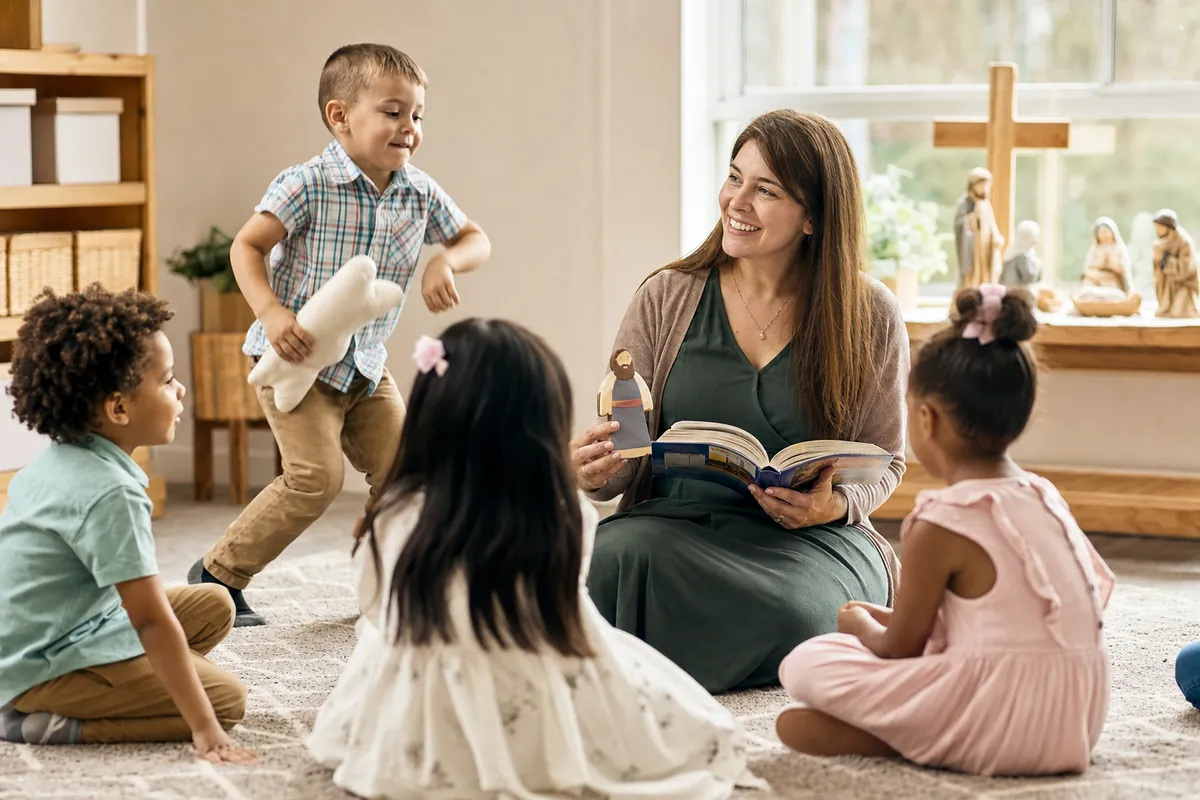
What can I do when a kid is disrupting the group?
Sometimes it's one child, not the whole room. A few in-the-moment moves work better than a stern voice.
- Give them a job. Holding the story board, turning pages, or handing out worksheets channels the energy somewhere useful.
- Move them closer, not further. A seat near you or a calm helper usually settles a child faster than a spot at the back.
- Use a quiet signal. A hand on the shoulder or a pre-agreed hand sign corrects without stopping the lesson or embarrassing the child.
- Offer a two-minute out. A short walk to get water and back can reset a kid who's genuinely maxed out, not just testing limits.
Correct calmly, and keep it brief. A long lecture about behavior during Bible time eats into the very minutes you're trying to protect.
What activities help squirmy kids stay focused?
Hands-on beats hands-folded almost every time. A few that work well with limited setup:
- Story retelling with props. Simple felt pieces, puppets, or even drawn-on paper plates give kids something to track visually.
- Freeze-and-listen games. Kids move around while you talk, then freeze on a signal for the next line of the story.
- Sermon notes or activity sheets. A simple page to draw or write on while listening keeps hands busy without pulling focus away from the lesson. This is exactly the kind of low-prep tool worth having on hand every week, and it's part of why our Christian Church Activity Pack Printable for Kids exists — Sunday school worksheets and sermon notes sized for young hands, ready to print.
- Whisper-and-repeat. Kids whisper the key verse or phrase to a partner, which turns passive listening into an active task.
You don't need every tool every week. Rotate two or three and kids start to recognize the rhythm, which itself helps them settle faster.
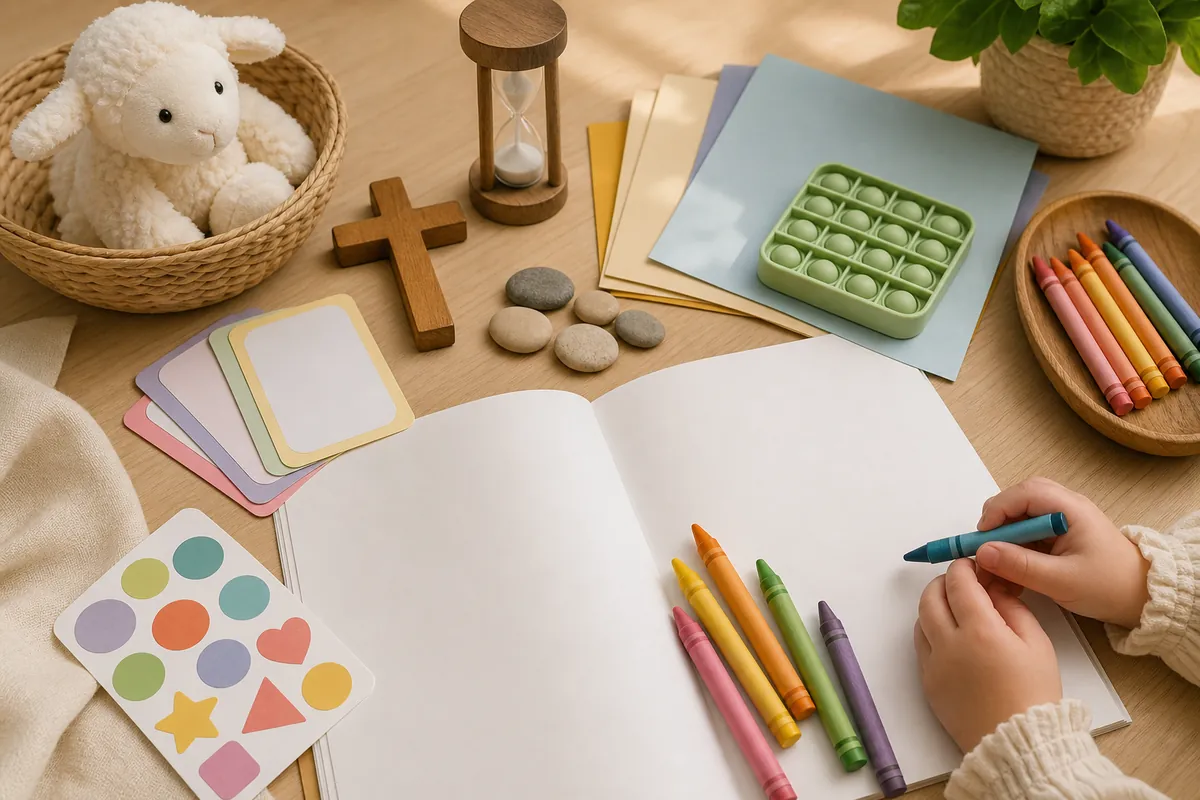
How much movement should a Bible lesson allow?
More than most teachers plan for. A good rule of thumb: alternate sitting and moving every three to five minutes for kids under eight, and every five to eight minutes for kids nine and up.
That might look like:
- 3 minutes: story segment, seated
- 2 minutes: stand and act out a line or sing a short verse
- 3 minutes: story continues, seated
- 2 minutes: talk-back question, hands up or turn to a partner
- 5 minutes: hands-on activity or worksheet
This isn't a loss of control. It's a schedule that works with how kids are actually built, and it tends to produce a calmer room than trying to enforce stillness for twenty straight minutes.
If your class already has a good rhythm around asking questions, our post on what to do when a kid's question stumps you in Bible class pairs well here, since an engaged, moving classroom also asks a lot more questions.
When should I worry it's more than wiggles?
Most restlessness is age-typical and resolves with the adjustments above. Take a longer look if you notice:
- The same child struggles to settle even with a job, movement breaks, and a calm seat
- Behavior escalates rather than easing after a short break
- Focus problems show up consistently across settings, not just your class
In those cases, a quiet conversation with the parents is more useful than adjusting your lesson plan further. You're not diagnosing anything, you're just sharing what you see with the people who know the child best.
Most Sundays, though, a wiggly class isn't a warning sign. It's just kids being kids, and a lesson that moves with them instead of against them, whether that's a call-and-response line, a five-minute craft, or a simple worksheet page from our shop, usually turns the room around within a week or two.
Frequently asked questions
- Is it normal for kids to struggle to sit still during Bible time?
- Yes. Most children under age ten cannot sit motionless and silent for more than a few minutes at a stretch, and that has nothing to do with how much they love Jesus or respect their teacher. Build movement into the lesson instead of fighting it.
- How long should a Bible lesson be for young kids?
- Aim for roughly one minute of focused listening per year of age, broken up with a movement or talk-back moment every three to five minutes. For a room of five and six year olds, that often means the whole lesson runs ten to fifteen minutes.
- What if one kid keeps disrupting the whole class?
- Give that child a specific, quiet job during the lesson, such as holding the story picture or passing out items, and sit them near a calm helper rather than at the back. A role gives restless energy somewhere useful to go.
- Should I punish a kid for not sitting still?
- No. Correct the behavior calmly and privately if needed, but treat the wiggling itself as a design problem for the lesson to solve, not a discipline problem for the child to be punished over.
- sunday school
- kids church
- classroom management
- bible lessons
- children's ministry
Related reading
- How to Teach Kids to Read the Bible for ThemselvesLearn how to teach kids to read the Bible with simple, Scripture-first steps that build confidence and understanding.
- How to Teach Kids the Creation Story in 7 Simple DaysLearn how to teach kids the creation story with seven simple, Scripture-first lessons from Genesis 1 for home, class, or church.
- How to Teach Kids to Confess Sin Without Shaming ThemLearn how to teach kids about confession without shame using simple words, calm tone, and Scripture that points straight to forgiveness, not fear.